In 1965, when Nam June Paik claimed his grainy video of the pope on a visit to New York was a work of art, video art was born. Often associated with the conceptual, it was stigmatized by many as a ‘low’ form of art. Because of the overwhelming role of technology in the production process, some people consider that it is not art because the artist isn’t involved enough. Along the years, the potential of video expanded as new developments came about. Several wonderful artists have left us a wonderful legacy of video art, but one man in particular truly unleashed the beauty of the medium.
As a young man, Viola grew passionate about technology, and started experimenting with video for the first time in the early 1970s. Quickly, he started producing bodies of work and became one of the most celebrated video artists. The particularity of his work is that he films in extreme slow motion, and his projection screens are often on a massive scale, in ultra-high definition. Those who have seen any of his works have felt an intense experience, as he captivates all the senses and channels them into a state of meditation.
The reason why Viola is such an important and central figure in contemporary art is probably because he gave the world undeniable evidence that a video could be as, if not more, gorgeous and stunning as a painted canvas. Inspired by Rembrandt, he works his videos like a painting, using a variety of techniques to achieve the effect he wants to have on the viewer. He is the example of someone who was able to perceive how technology could help him create and achieve what no one else had managed to do before.
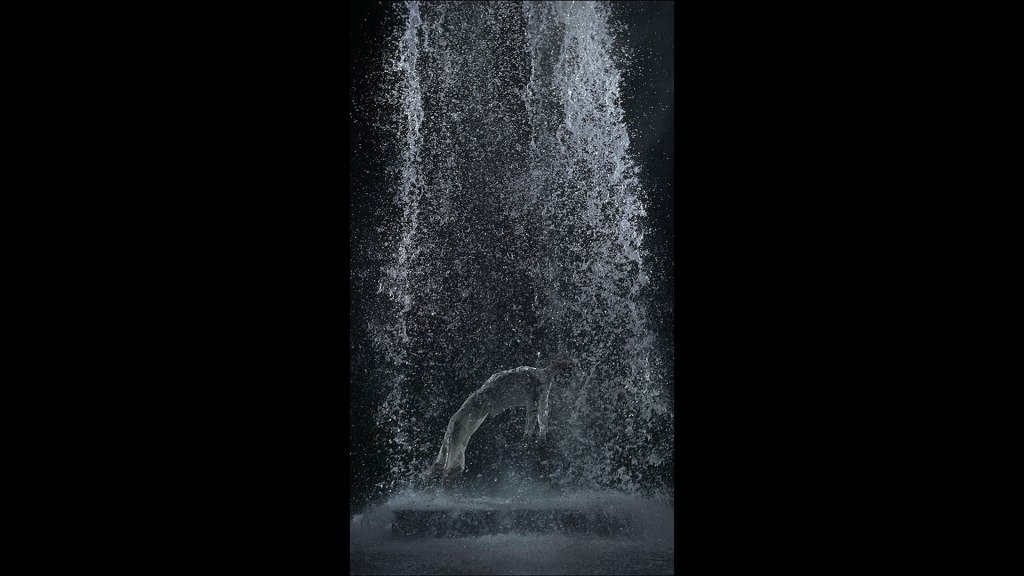
I personally had a transcendent experience when first seeing his piece Tristan’s Ascension. In a huge pitch black room, a gargantuan screen in the form of a monolith soars up to the ceiling, high above our heads. Ethereal sounds fill the room, and seem to come from everywhere around us. On the bottom of the screen, a man is laying on an altar, still. Everything around him is dark, there seems to be no sign of life. This deathly visual environment contrasts with the lively sounds of birds singing. Soon enough an ominous, strange whisper reaches our ears, as water starts ascending from the ground up, in a straight line through the gigantic screen. As time goes by, at an incredibly slow pace, the water comes up massively, filling the screen with beautiful splashes of blue, and the laying figures starts ascending.
In this moment, I felt like I was seeing absolute beauty, to such an extent that I did not even have the words to describe it. Few artworks have ever made me feel this strongly. He explores notions of life and death, evokes the cycle of rebirth, and plays with our senses to deliver a completely immersive spiritual experience.
Watch Tristan’s Ascension:
And learn more about him here:
 Digital Arts